
A client once came to us asking to build backlinks for a blog targeting “stretches for cyclists.” Before starting link building, we checked the search intent and found the real problem.
The blog was built around the wrong intent entirely. After rewriting the content to match what Google’s SERP actually showed, the page went from the second page to #1 without building a single backlink.
That’s the power of getting search intent right.
And yet, it’s one of the most overlooked steps in SEO. Teams invest in content and links while ignoring whether the page matches what users are actually searching for.
96.55% of web content gets zero organic traffic from Google (Ahrefs). In many cases, the issue isn’t quality. It’s intent mismatch.
At Growffic, intent analysis is the first step in every keyword research and content planning process.
In this article, we’ll break down:
- What is Search Intent?
- Why is it Important to find the Right Search Intent?
- How to Find Search Intent?
- Search Intent Examples
By the end, you’ll be able to look at any keyword and confidently decide what kind of content Google and users expect to see.
What Is Search Intent?
Search intent is the purpose behind a user’s online query – what they are trying to find, learn, solve, or buy. It reflects the user’s mindset and expectation when they type a keyword into Google.
Search intent typically falls into five types:
- Informational — The user wants to learn something. Example: “what is search intent”
- Navigational — The user wants to reach a specific website or page. Example: “Ahrefs login”
- Transactional — The user wants to buy or take action. Example: “SEO Services”
- Commercial Investigation — The user is comparing options before a decision. Example: “best Organic SEO Agency”
| Intent Type | User Goal | Example Keywords | Recommended Content Format |
| Informational | Learn or understand something | what is search intent, how to create a content strategy | Blog post, guide, tutorial, explainer, how-to article |
| Navigational | Reach a specific website or page | Growffic SEO Services, Growffic Blog | Brand homepage, login page, product page, about page |
| Commercial Investigation | Compare options before making a decision | Best SEO Agency, Ahrefs vs Semrush | Comparison article, listicle, in-depth review, roundup |
| Transactional | Buy, sign up, or take a specific action | Organic SEO Services | Service page, product page, pricing page, landing page |
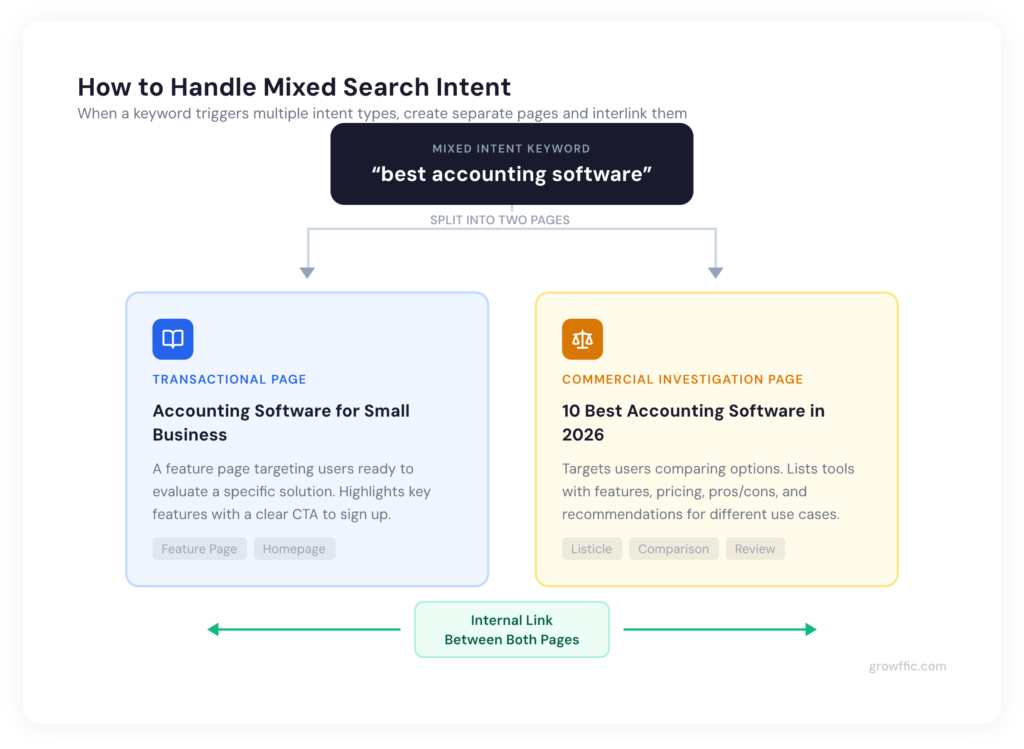
Note: Many keywords trigger mixed intent on the SERP, where Google ranks content serving multiple intent types. In such cases, create separate pages for each dominant intent and interlink them.
Why is it Important to Find the Right Search Intent?
Google’s ranking systems are designed to prioritize content that is helpful, reliable, and created to benefit people (Google Search Central).
Content can only be helpful if it answers what the user was actually looking for, which is why intent alignment is the foundation of ranking well.
When the intent is aligned, your page is more likely to rank and retain visitors while driving conversions. If your content doesn’t satisfy the search intent, it won’t rank, no matter how well it’s written or how strong the on-page optimization is.
How to Find Search Intent
Use the following steps to identify the search intent behind any keyword
1. Analyze the SERP for the Keyword
Enter the keyword in Google or use tools like Ahrefs Keywords Explorer and check the type of pages currently ranking.
Apart from the blue links, also look at People Also Ask boxes, video carousels, featured snippets, and AI Overviews. Each of these signals tells you something about how Google interprets the intent. For example, if there’s a video carousel, it often means users want visual or tutorial content, not just text.
2. Review the Top-Ranking Pages
Evaluate the topics, formats, and angles that top-ranking pages use. If most results answer a “how-to,” the intent is clearly informational, and people are looking for “how-to” style topics.
3. Identify Query Modifiers
Words like “best,” “vs,” “near me,” “price,” “how,” “services”, and “review” indicate a user’s intent. When creating an article or a page, it’s important to include similar modifiers to increase the chances of ranking.
Here’s something most guides won’t tell you: modifiers change over time. A keyword that was purely informational two years ago may now show commercial results because user behavior has shifted. Always verify current SERP results rather than relying on assumptions from older keyword research.
4. Create Content to Satisfy the Search Intent
Once you’ve identified the search intent, the next step is to create content of the same type that is already ranking. It is also important to ensure that your content provides additional information compared to the top ranking articles.
If the dominant intent is informational and the top results are how-to guides, your page should be a how-to guide as well.
Likewise, if the SERP is dominated by service pages or product pages, you need to create a service or product page, not a blog post to target that keyword.
In simple terms, Google has already shown you the preferred content format. Your job is not to reinvent the wheel, but to create a better version of what’s already ranking.
One more thing: matching intent doesn’t mean copying what’s already ranking. It means understanding the format and angle that Google rewards, then creating something that covers the topic more thoroughly or from a unique perspective. That’s where topical authority and original expertise make the difference.
5. Handling Mixed Search Intent (Most Commonly Misunderstood)
Mixed intent is where most people get confused.
When a keyword has mixed intent, usually a combination of informational and commercial, Google ranks multiple content types on the SERP. In this situation, the most effective approach is to create separate pages, each designed to satisfy a specific intent.
Instead of trying to force everything into a single page, you should:
- Create one informational page that educates users (how-to guides, explanations, tutorials)
- Create one commercial page that focuses on comparisons, reviews, or solutions
These pages can then be internally linked, allowing Google to rank the most relevant page based on what the user is actually looking for.
Search Intent Examples
To understand search intent in practice, let’s look at a few real keyword examples and analyze them using Ahrefs.
By reviewing the SERP overview in Ahrefs, we can clearly see what type of content Google is ranking and, in turn, identify the dominant search intent.
Informational Intent
Example Keyword: How to create a content marketing strategy
When we analyze the keyword “How to Create a Content Marketing Strategy” in Ahrefs, the top-ranking results are primarily long-form blog posts and detailed guides that explain the topic step by step.
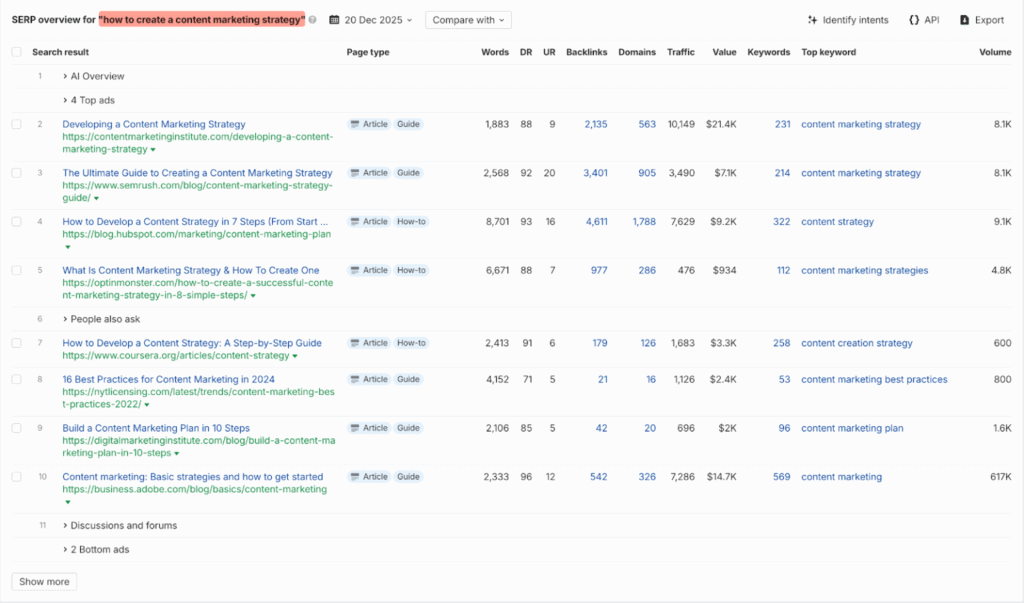
Ahrefs – How to create a content marketing strategy
The SERP is not limited to a single content format. As shown in the analysis, the results are a mixed SERP, with both “how to” articles and “guide”-style articles ranking on the first page.
In cases like this, the content type should be decided based on the dominant format in the SERP, not personal preference.
For this keyword, the majority of ranking pages are guide-style articles, which suggests that Google favors comprehensive, in-depth content over short, tactical walkthroughs. Therefore, the best approach is to create a how-to guide, “How to Create a Content Marketing Strategy (A Complete Guide),” that combines step-by-step instructions with broader strategic context.
Transactional Intent
Example Keyword: Magento development services
When we analyze the keyword “Magento development services”, the top-ranking results are largely made up of agency service pages.
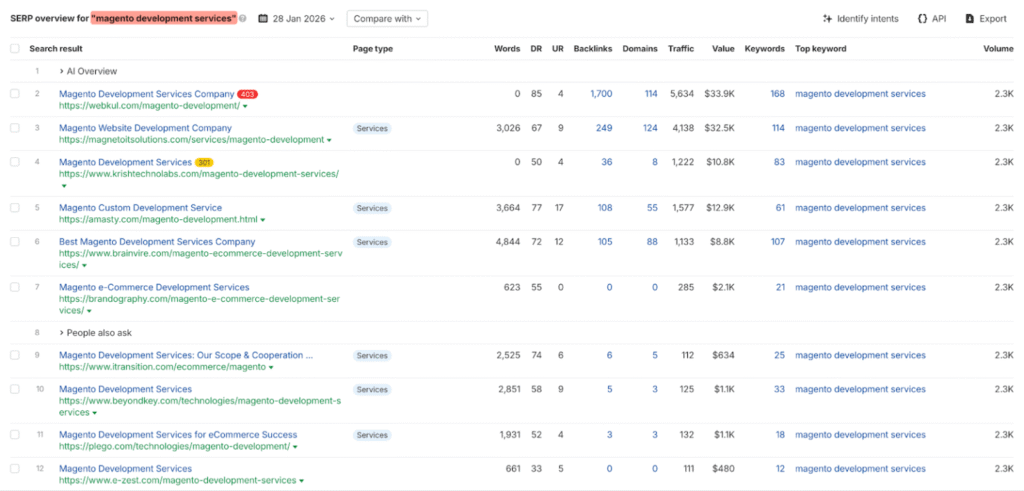
Ahrefs – Magento development services
There is no informational or blog-style content ranking for this keyword, which strongly signals that Google interprets this query as having transactional intent.
This indicates that users searching for Magento development services are actively looking to hire a Magento development agency or service provider, rather than learn about Magento or compare platforms.
Based on the SERP composition, the correct content format for this keyword is a dedicated service page.
Here, we recommend creating a “Magento Development Services” page that aligns with transactional search intent, SERP expectations, and high conversion readiness.
Commercial Investigation Intent
Example Keyword: Best email marketing tools
Ahrefs shows that the pages ranking for this keyword are primarily comparison articles, listicles, and in-depth reviews.
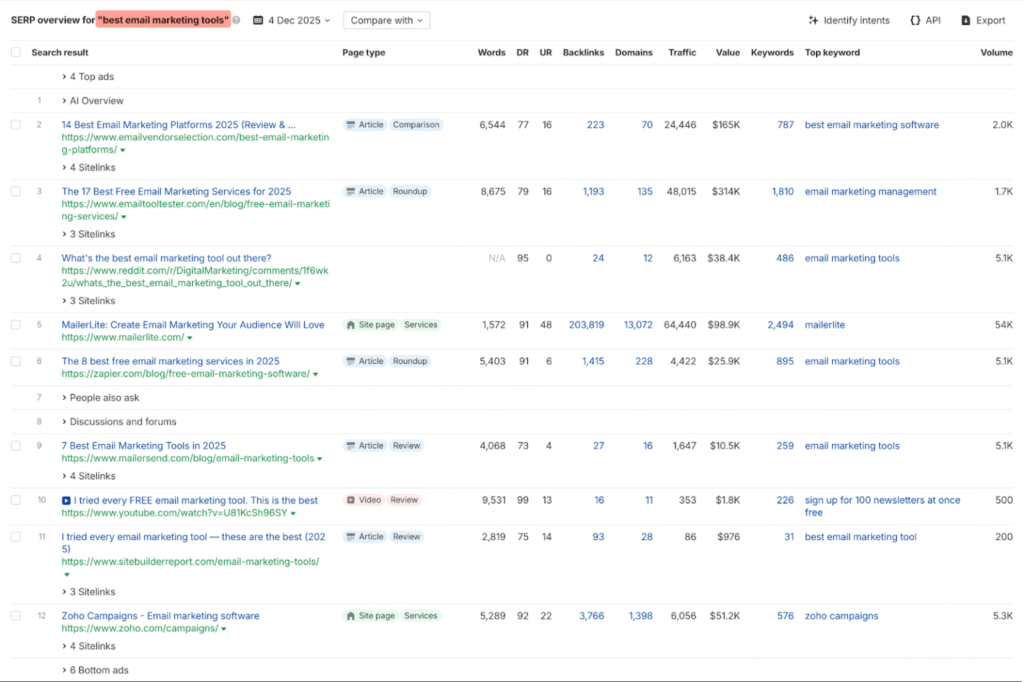
Ahrefs – Best email marketing tools
This reflects a commercial investigation intent, where users are researching and comparing options before making a decision.
Here, we recommend creating an article around “XX Best Email Marketing Tools (Year)”, for example, “10 Best Email Marketing Tools (2026).”
Mixed Intent
Example Keyword: Best accounting software
When this keyword is analyzed in Ahrefs, the SERP shows a mix of different content types. The top-ranking pages include comparison and list-based articles, individual accounting software product pages, review platforms, and community discussions.
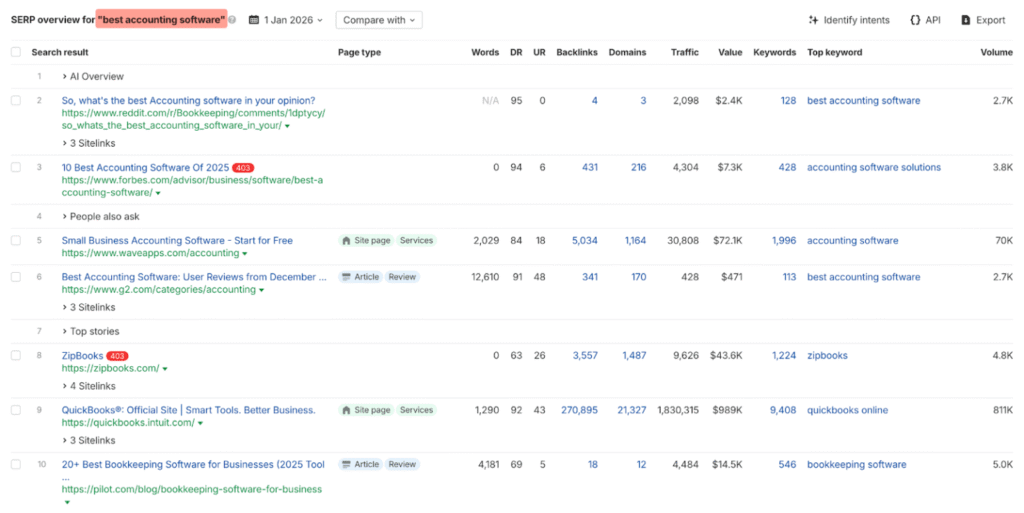
Ahrefs – Best accounting software
Here, we recommend creating a listicle article around “XX Best Accounting Software” and also try to rank your feature page or homepage around “Accounting Software”
Case Study: How Aligning Search Intent Improved Rankings
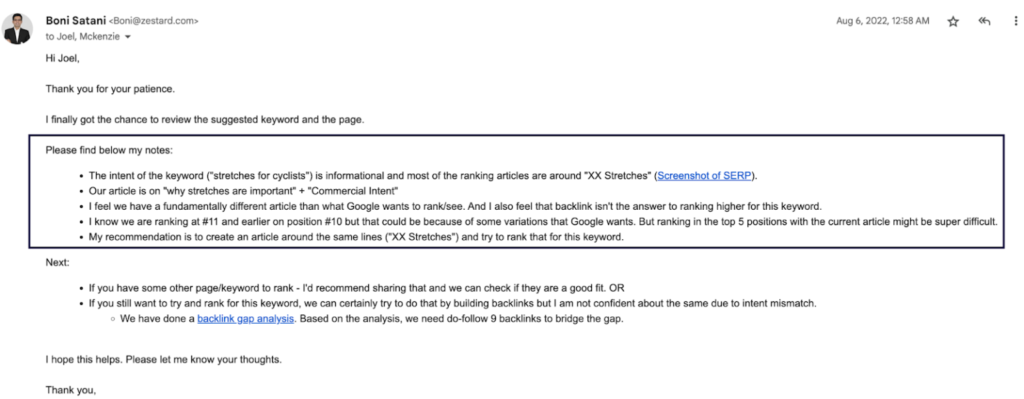
In August 2022, a client approached us to build backlinks for a blog targeting the keyword “stretches for cyclist.”
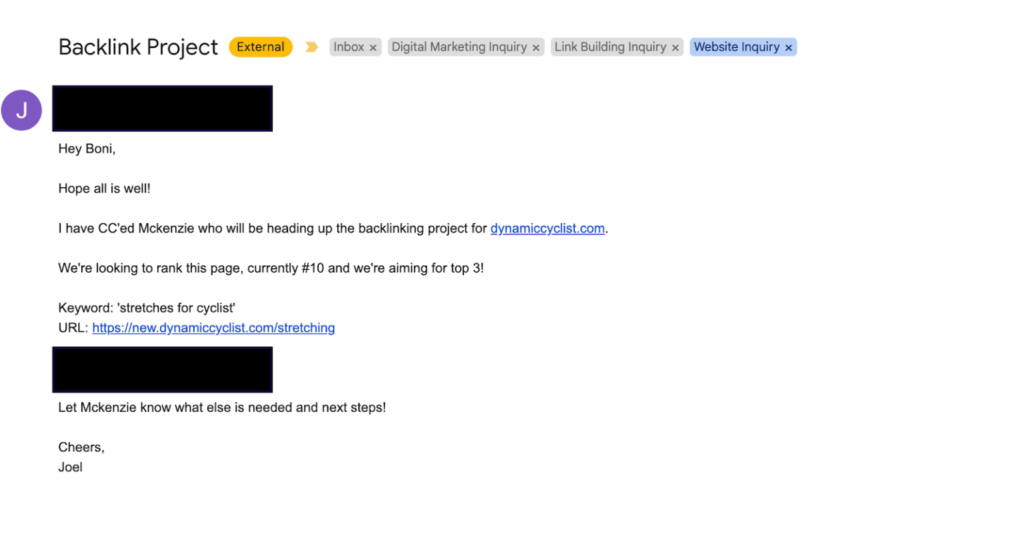
Client Conversation
Before starting link building, we analyzed the search intent on Google SERPs. All top-ranking pages followed a clear list-style format, such as “XX Stretches for Cyclists.”
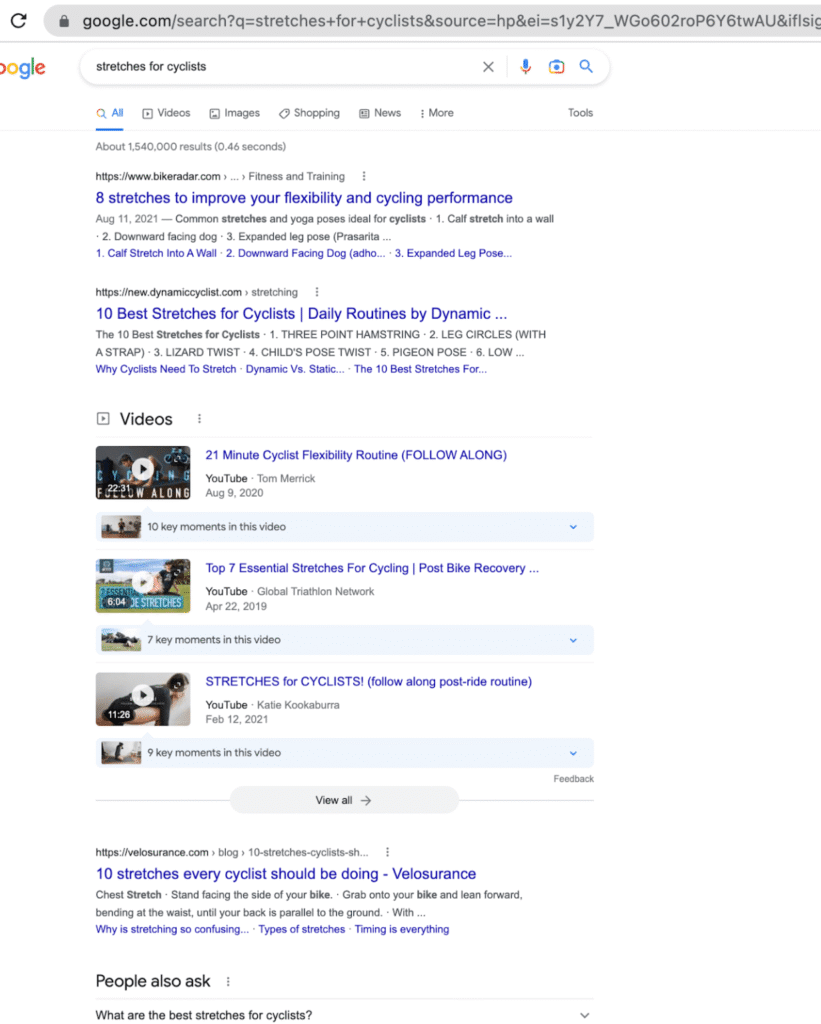
August 2022 Google SERP
However, the client’s blog was on “Why Cyclists Need to Stretch!”, a completely different intent. Google was ranking actionable stretch lists, while the client had published an informational, reasoning-based article.
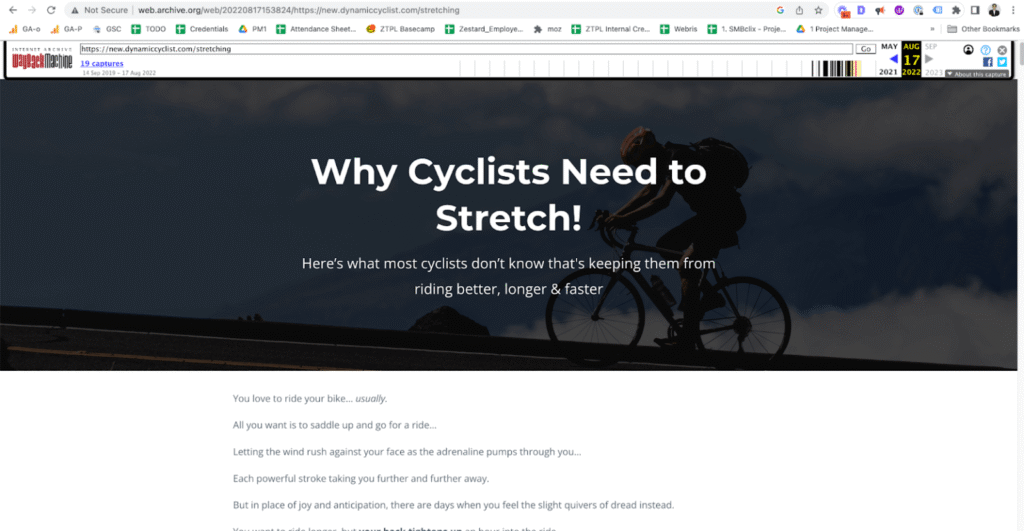
Blog Post on Incorrect Search Intent
So, we requested the client to rewrite the blog to match the search intent. Once the content was updated into a list-based stretch guide, the page aligned perfectly with what users (and Google) expected.
Client Conversation
Result:
Without building a single backlink, the blog started ranking from the second page to position #1 and continues to hold the #1 position to this day.
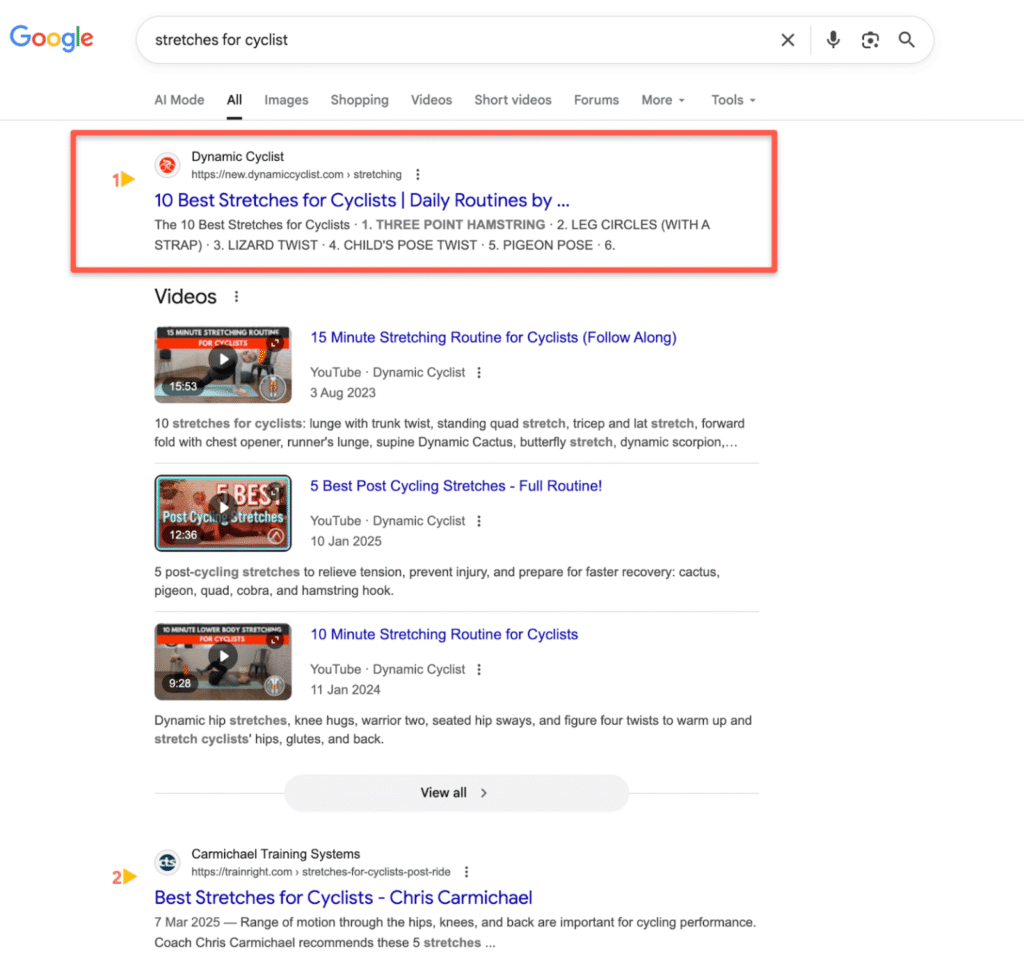
Result: From Second Page to Position #1
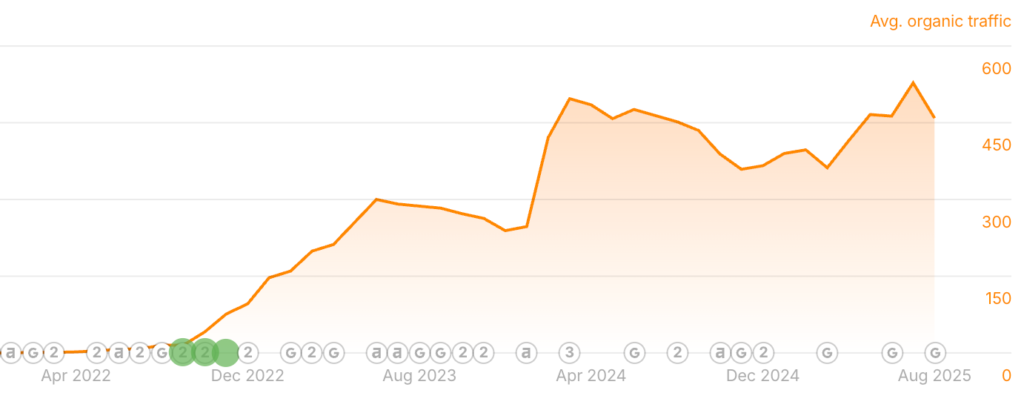
Avg. Organic Traffic – 0 to 540 Per Month
Conclusion
Search intent isn’t a one-time exercise. As SERPs evolve and Google refines its understanding of queries, your content strategy needs to adapt.
Regularly revisiting intent alignment is what separates sites that hold rankings from those that lose them after every update.
At Growffic, we help Ecommerce, SaaS and B2B brands build content strategies rooted in intent analysis, not guesswork. If you’re looking to audit your existing content or build an intent-first SEO strategy, get in touch.
